Building AI on ESP32, STM32, and Edge Devices
Picking hardware, shrinking models, and shipping real-time inference without the cloud.
Read More
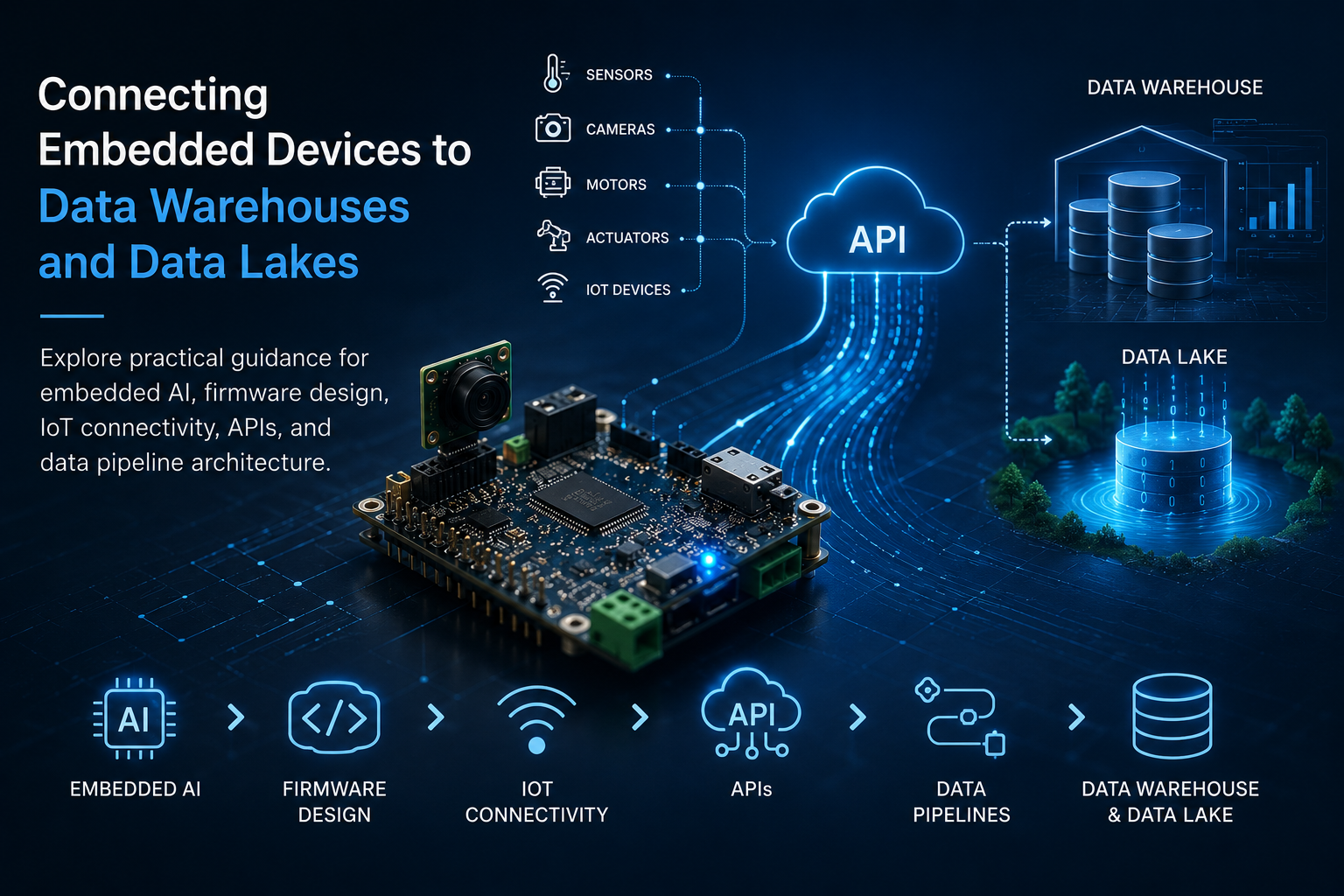
A stream of raw messages arriving from a few thousand devices is not, by itself, a dataset. It's timestamped, semi-structured, occasionally out of order, sometimes duplicated by retries, and full of firmware-version-specific quirks. Turning that stream into something a data analyst, a dashboard, or an AI agent can actually query reliably is a distinct engineering problem from getting the devices connected in the first place, and it's one that gets underestimated constantly.
We usually get pulled into this stage after a client has already built the device-to-cloud pipeline and discovered that the data landing in their warehouse doesn't quite mean what everyone assumed it meant.
The right storage pattern depends less on trend and more on what the data actually looks like and who needs to use it.
A pipeline that holds up in production is built around a few unglamorous but non-negotiable pieces: a schema contract between firmware and backend so a field renamed on one side doesn't silently break the other; idempotent ingestion so a device's retry after a dropped connection doesn't create a duplicate reading; and schema evolution handled deliberately, with versioning, instead of new firmware quietly changing what a column means.
On top of that raw layer, a semantic layer matters more than most teams expect. "Temperature" needs to mean the same thing, in the same units, whether it's coming from a v1 device in Fahrenheit or a v3 device in Celsius. Without that layer, every downstream dashboard and every AI agent querying the data inherits the inconsistency.
A dashboard showing flat, healthy-looking numbers can mean the fleet is doing great, or it can mean a third of the fleet stopped reporting six hours ago and nobody's noticed yet. Pipeline observability, not just product observability, is what tells the difference: monitoring ingestion volume against expected fleet size, flagging schema drift the moment it appears, and alerting on data quality issues at the source rather than downstream where they're much harder to trace back.
A dashboard that looks fine and a pipeline that's actually healthy are not the same thing, and the gap between them is usually where outages hide.
Once telemetry is clean, well-modeled, and sitting in a queryable warehouse or semantic layer, it becomes usable by more than just dashboards. Retrieval-augmented generation and AI agents can only reason well over data that's trustworthy and consistently structured; an agent answering "which devices are trending toward failure" is only as good as the pipeline feeding it. This is usually where the data engineering work we do stops being just reporting infrastructure and starts being the foundation for the AI-driven parts of a product.
In practice, the pipelines that hold up long-term share a few consistent traits:
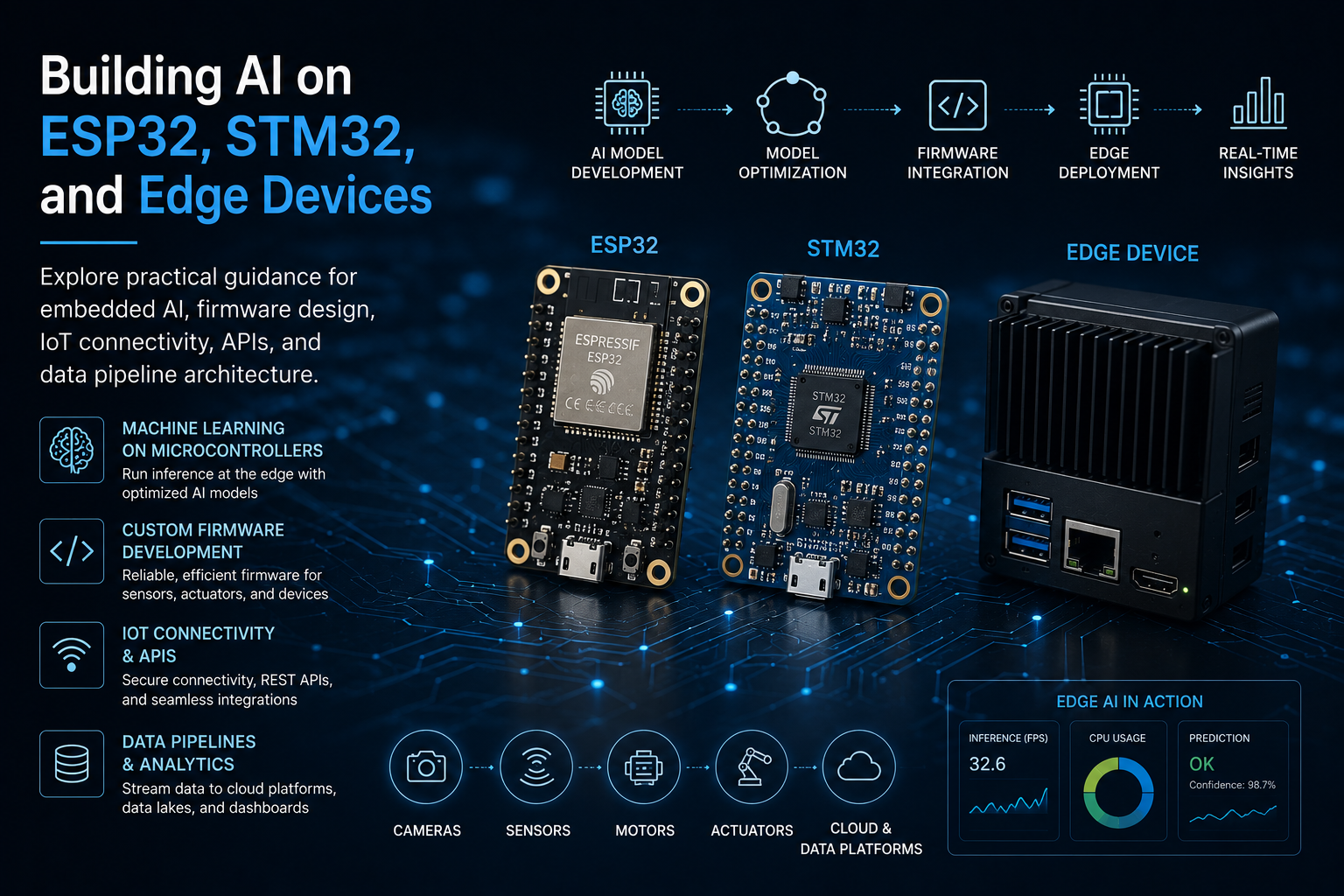
Picking hardware, shrinking models, and shipping real-time inference without the cloud.
Read More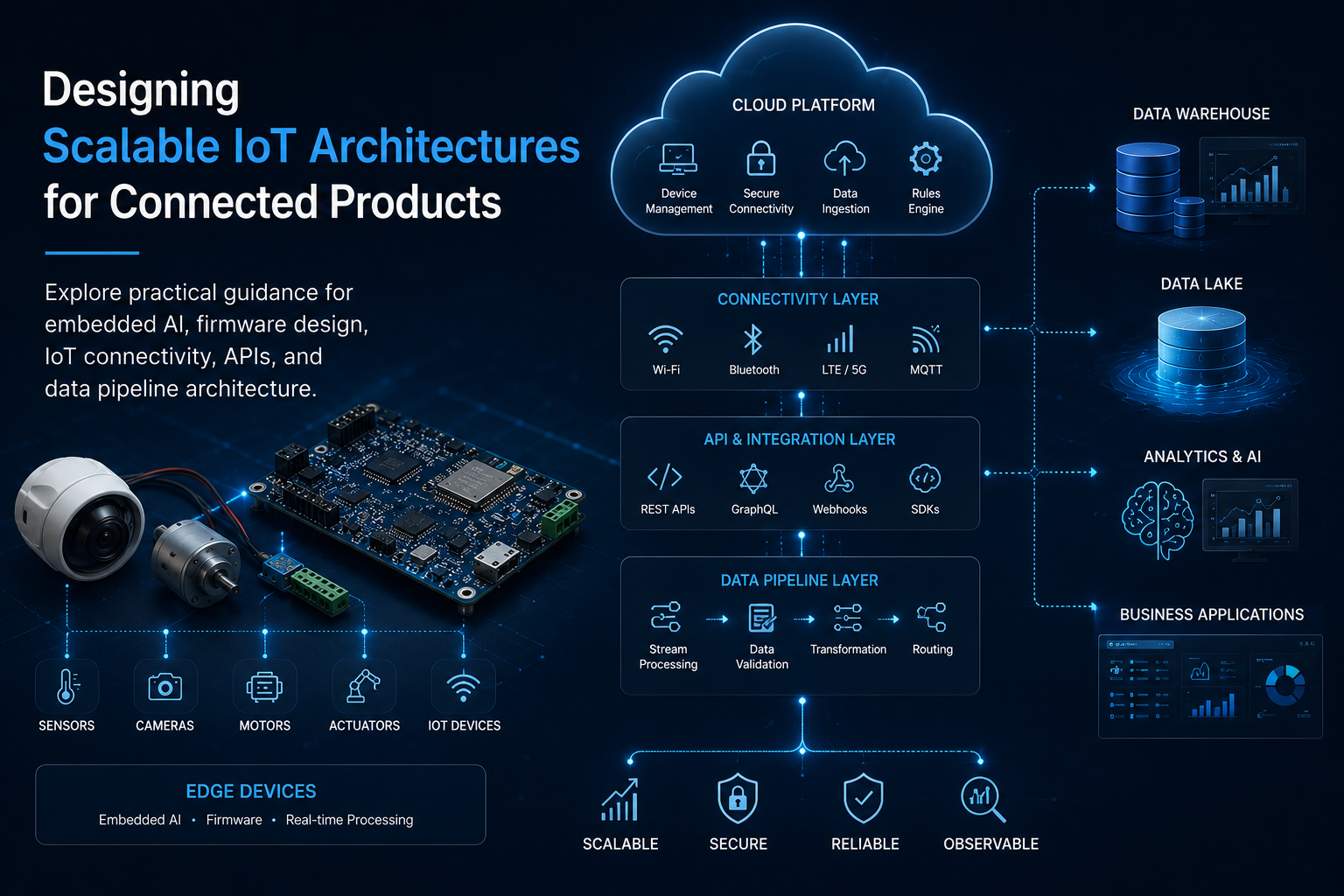
Smart industrial monitoring system integrating sensors, APIs, databases, and analytics dashboards.
Read More
Sentrivo engineers intelligent systems that connect edge devices, telemetry, observability, enterprise data, and AI—turning signals into action.
Copyright © Sentrivo. Embedded AI. Intelligent Devices. Connected Data.