Designing Scalable IoT Architectures for Connected Products
Smart industrial monitoring system integrating sensors, APIs, databases, and analytics dashboards.
Read More
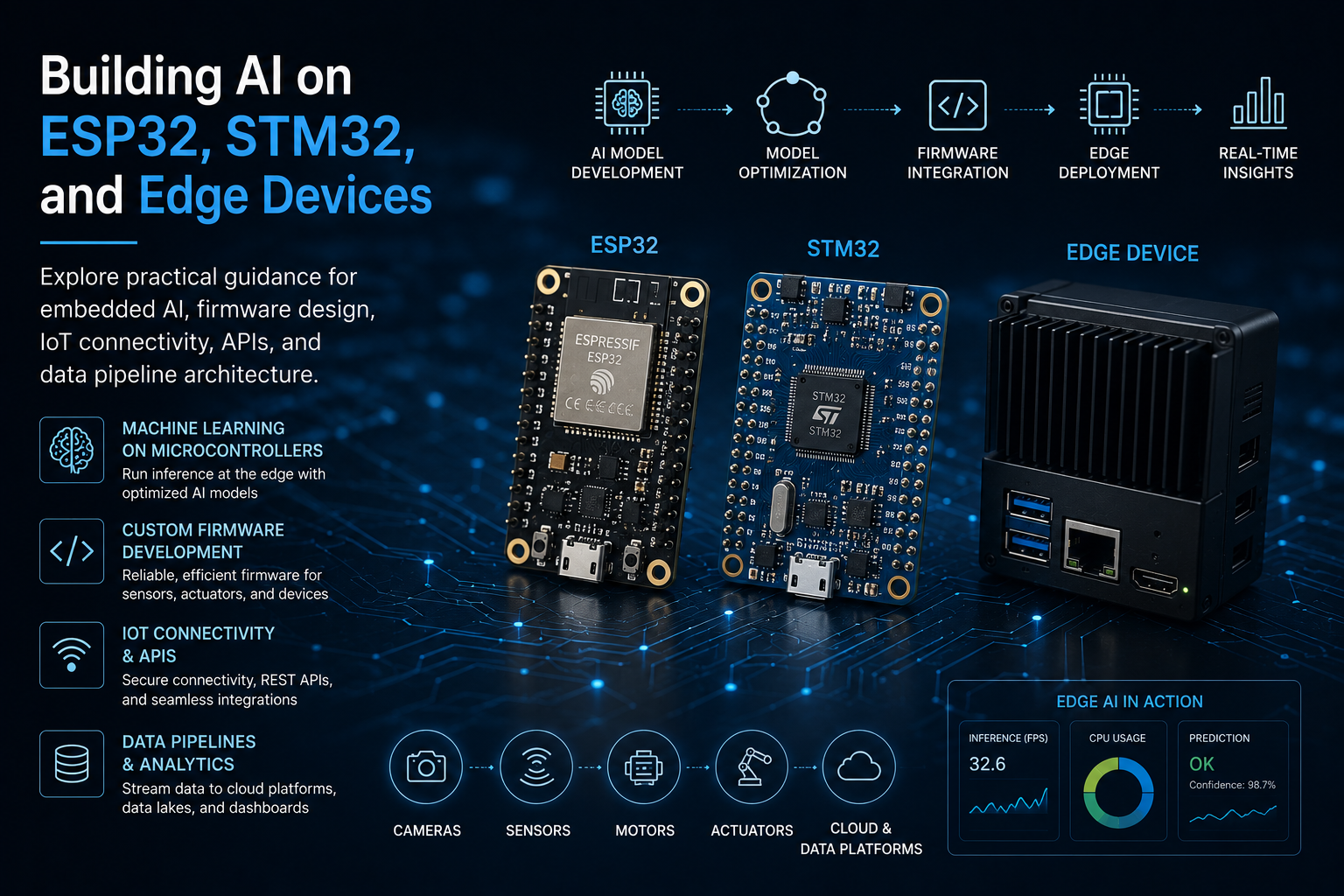
A few years ago, running machine learning directly on a microcontroller was mostly a research demo. The chips were too slow, memory was measured in kilobytes, and "real" AI meant a round trip to the cloud. That's no longer true. Modern MCUs like the ESP32 and the STM32 family now run quantized neural networks fast enough for real-time keyword spotting, vibration analysis, and simple computer vision, all without ever touching the network.
For a lot of the connected products we build at Sentrivo, that shift changes the whole architecture conversation. Instead of asking "how do we get sensor data to the cloud fast enough to act on it," the question becomes "does this decision need the cloud at all?" Increasingly, the answer is no.
Edge inference isn't just a cost-saving trick. It solves problems that a cloud round trip fundamentally can't:
"Just use an ESP32" is common advice, and it's often right, but not always. We typically narrow the choice down along a few axes: how much compute the model actually needs, how much power budget the product has, and how much of the workload is genuinely on-device inference versus connectivity and orchestration.
The model that trains cleanly on a GPU almost never fits, as-is, on a device with 320KB of RAM. Getting there usually takes a few deliberate steps: quantizing weights to int8, pruning the architecture down to what the task actually needs, and validating that accuracy holds up after each cut, not just estimating it. Frameworks like TensorFlow Lite Micro, Edge Impulse, and CMSIS-NN handle a lot of the heavy lifting, but they don't replace testing on the real chip, with the real sensor, in the real enclosure.
This is where we see the most avoidable mistakes: teams that optimize a model against a validation set that looks nothing like the noise, lighting, or vibration profile the device will actually see in the field.
The hardest part of edge AI usually isn't training the model. It's making that model survive contact with real hardware, real power budgets, and real customers.
The failure modes that matter almost never show up in a lab demo. Thermal throttling changes inference timing after a device has been running for an hour in direct sun. Memory fragmentation from a poorly managed heap causes a crash after days of uptime, not minutes. A watchdog timer that isn't tuned to the model's worst-case inference time resets the device mid-cycle. And an OTA update process that wasn't designed for the model's memory footprint bricks a percentage of the fleet on rollout.
None of these are exotic problems, but they're the reason "it worked on my dev board" and "it works reliably across 5,000 units in the field" are two very different engineering bars. We design for the second one from day one.
When a client brings us a computer vision, keyword spotting, or anomaly detection idea for an embedded product, we work through it in roughly this order:
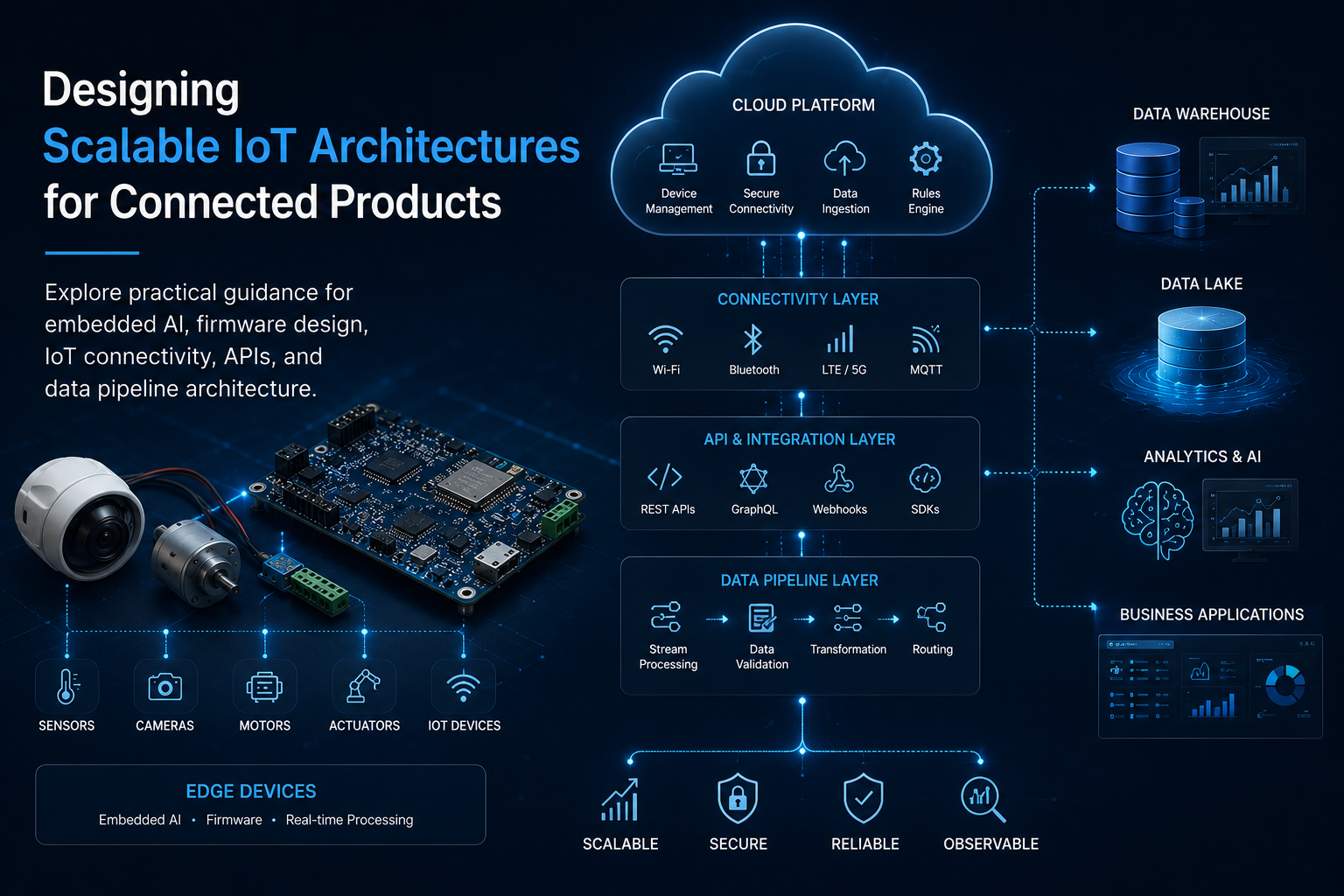
Smart industrial monitoring system integrating sensors, APIs, databases, and analytics dashboards.
Read More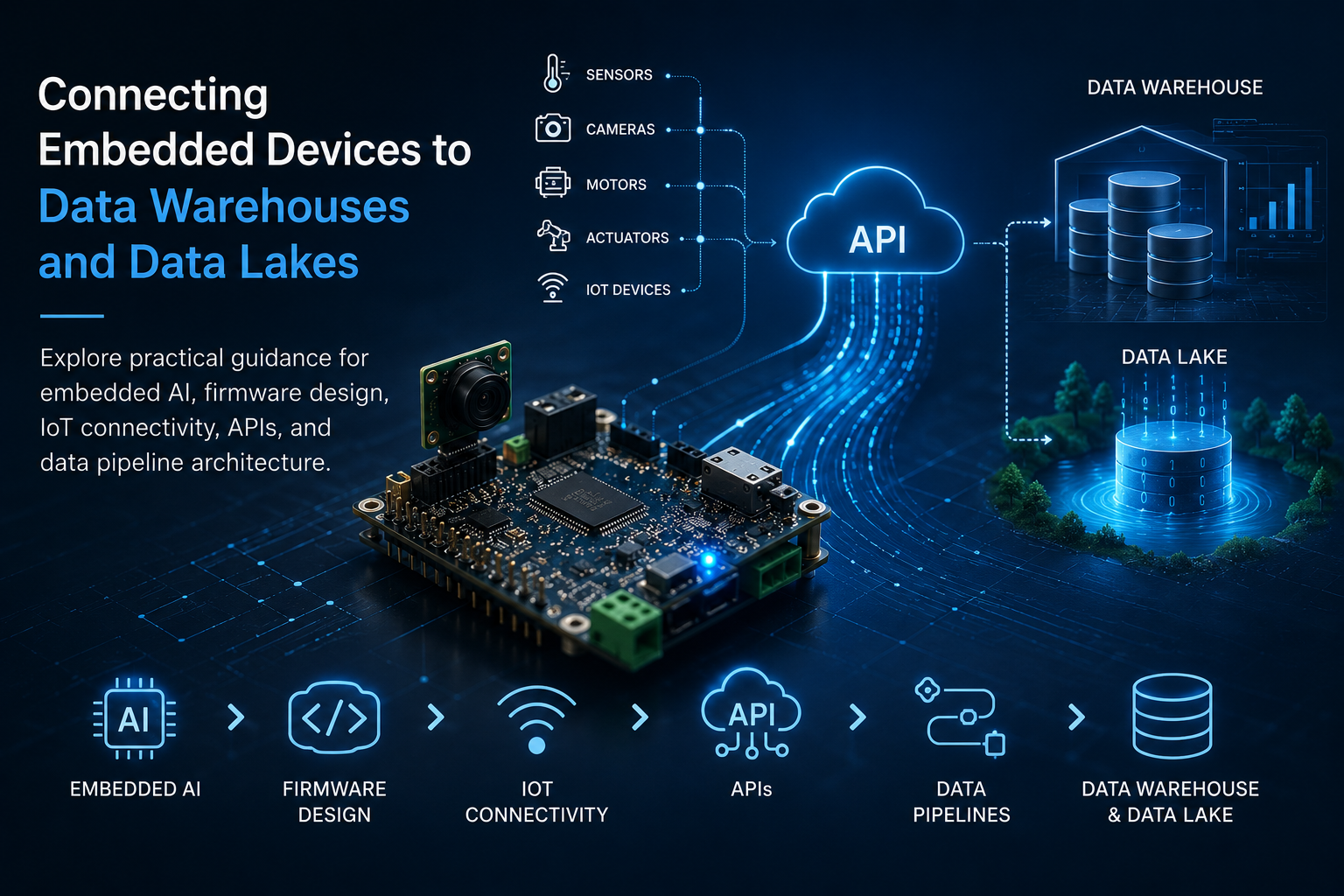
Device telemetry pipelines feeding Snowflake, SQL Server, PostgreSQL, and cloud data platforms.
Read More
Sentrivo engineers intelligent systems that connect edge devices, telemetry, observability, enterprise data, and AI—turning signals into action.
Copyright © Sentrivo. Embedded AI. Intelligent Devices. Connected Data.